Accessibility Tools
Skip to main content
How can we help you?

Wychavon Growth Fund for successful applicants

In this section

This guidance applies to successful applicants only.

If your application has not yet been approved, some requirements may not apply.

Please use the dropdown links below to find the information you need.

  • Quick Start – What You Need to Do

    • Read and sign the letter about Minimal Financial Assistance (MFA), if received.
    • Read and sign your Grant Funding Agreement (GFA)
    • Do not start your project until the GFA is signed
    • Complete the creditor form so we can pay you
    • Keep invoices, proof of payment, and photos
    • Submit a claim form when ready
    • Contact us before making any changes
    • Complete a final Outputs report.
  • Subsidies and Minimal Financial Assistance

    Some grants count as subsidy under MFA rules.

    • Funding limit: £315,000 over a rolling 3-year period

    What you need to do:

    • Received a letter?→ Sign and return it
    • No letter? → No action needed
    • Unsure if you may exceed the limit? → Contact us

    You will receive a confirmation letter after your final payment. Please retain this for 3 years.

  • Signing Your Funding Agreement

    You must read the full GFA before signing.

    Key rules

    • Do not start your project before the GFA is signed and your project start date has passed
    • Funding is paid in arrears
    • Assets must be kept for up to 2 years
    • Funds must only be used for approved purposes
  • Stage Payments (Optional)

    You can request up to three stage payments to help with cash flow

    Contact us before signing your GFA to arrange this.

  • Next Steps

    1. You will receive your GFA via Nitro Workspace.
      • No software download is required
      • You can sign directly in your web browser
      • The agreement must be signed by an authorised signatory
    2. We will countersign and return a copy to you.
    3. Once you have received the countersigned agreement, you may begin your project in line with the approved terms.
  • How You Get Paid

    Step 1: Set up payment

    We will send you a creditor form, which must be completed before any payments can be made.

    Step 2: Submit a Claim

    Near your project end date, you will receive a link to an online Claim Form (no account required).

    You must upload:

    • Invoices (matching approved costs)
    • Proof of payment (e.g. bank statements)
    • Photos of the project or equipment

    Important:

    • Costs incurred before the project start date are not eligible
    • You may claim up to the approved grant amount or agreed percentage, whichever is lower
    • Payments to suppliers or contractors must not be made by cash or cheque unless agreed with us in advance. Payments should be made from a bank account or credit card held in the name of your business. When submitting your claim, you will be required to provide a bank statement or credit card statement as evidence of payment.

    Step 3: Claim assessment

    We will review your claim for completeness and accuracy.

    Indicative timescales:

    Stage

    Time

    Claim review

    Up to 2 weeks

    Payment after approval

    Up to 5 working days

    We may contact you to request additional information or clarification about your claim. If further information is required, the assessment timescales may be extended and payment may take longer than indicated above

  • If Your Project Changes

    You must contact us in advance of making any changes.

    Examples of changes that require approval include:

    • Suppliers or contractors
    • Equipment, goods, services, or works being purchase
    • Approved project costs or budgets
    • Project timescales or completion dates
    • Outputs or deliverables
    • Match funding arrangements

    Please note that approval is not automatic. Costs incurred or commitments made before approval is received may not be eligible for grant funding.

    If a change is approved, we will confirm this in writing by email. Please retain this confirmation for your records

  • Marketing & Publicity

    You must acknowledge funding support.

    You are required to:

    • Follow the publicity requirements set out in your GFA
    • Display a plaque at your premises (provided upon project completion)
  • Reporting & Monitoring

    During delivery, we may contact you to review progress and confirm that you remain on track. Site visits may also take place.

    We ask that you respond promptly and fully to any queries. Our aim is to support you in delivering a successful project.

    After completion:

    • 2–3 months after project completion, you will receive a link to an Outcomes Report
    • This must be used to report on the outputs agreed in your GFA
  • Common Mistakes to Avoid

    • Starting your project before signing the GFA
    • Submitting claims without proof of payment
    • Making changes without prior approval
    • Not completing the creditor form
    • Exceeding agreed costs or scope
  • Need Help?

    If you are unsure about anything, please email: This email address is being protected from spambots. You need JavaScript enabled to view it.or alternatively:

    Meg Crane, Economic Development Support Officer

    • Email: This email address is being protected from spambots. You need JavaScript enabled to view it.
    • Phone: 01386 565345

    Adrian Rosten-Smart, Economic Development Grants Officer

    • Email: This email address is being protected from spambots. You need JavaScript enabled to view it.
    • Phone: 01386 565453

Read more …Wychavon Growth Fund for successful applicants

Wychavon Growth Fund FAQs

In this section

Explore the Frequently Asked Questions below to find quick answers to common questions about the Wychavon Growth Fund.


  • 1. What is the Wychavon Growth Fund

    The Wychavon Growth Fund provides grant funding to support business growth within Wychavon District. The Fund is designed to help businesses invest in projects that lead to expansion, improved productivity, and economic impact, such as job creation, increased turnover, or additional visitor numbers. It is funded and run by Wychavon District Council.

  • 2. Who can apply?

    Applications are welcomed from:

    • Micro, small and medium‑sized enterprises (SMEs)
    • Community Interest Companies
    • Social enterprises
    • Commercially active not‑for‑profit organisations

    Applicants must be based within Wychavon District and able to clearly demonstrate how the proposed project will support business growth.

  • 3. What size grants are available?

    Grant awards are available as follows:

    • Existing businesses: £500 to £15,000
    • Start‑up businesses: £500 to £2,000

    All grants require a minimum of 50% match funding, which must be provided by the applicant.

  • 4. How is a start up business defined?

    For the purposes of the Fund, a start‑up business is one that has:

    • Not yet started trading, or
    • Been trading for less than 12 months, and
    • Is operating as a new legal entity

    Applicants must have a business plan in place and have completed appropriate start‑up training.

  • 5. Is business experience acceptable as an alternative to start up training?

    Yes, you may demonstrate equivalent knowledge to formal start‑up training through alternative training or relevant qualifying experience. However, general business experience alone is not sufficient unless it involves the ownership or management of a start‑up business within the last 10 years that operated for a minimum of two years.

  • 6. My business is diversifying. Does this count as a start up?

    If your business has been operating for more than one year, and the diversification is being delivered through the same legal entity under which you already trade, it will be treated as an existing business, even if the activity itself is new.

  • 7. Can refurbished or second hand equipment be funded?

    Yes, refurbished or second‑hand equipment may be eligible where it:

    • Is fit for purpose and in good working condition
    • Comes with a warranty or guarantee
    • Represents good value for money

    Evidence may be required to demonstrate condition, warranty, and pricing.

  • 8. Does my business need to operate exclusively in Wychavon District?

    No. Some businesses serve customers outside Wychavon, which is acceptable. To be eligible, the business must be based and operating at, or from, an address within Wychavon, and where the items for which funding is sought must normally be kept.

  • 9. Can I apply if my registered office is outside the district?

    Yes, provided your main trading address and operations are based within Wychavon District.

  • 10: Are Parish Councils and Village Halls eligible to apply?

    The Fund is open to micro, small and medium‑sized enterprises based in Wychavon, including Community Interest Companies, social enterprises, and commercially active not‑for‑profit organisations.

    Parish Councils are not eligible to apply under the Fund rules. Village halls may be eligible where their governance and operating model meet the Fund’s criteria, and provided they are commercially active. If you represent a Village Hall Management Committee considering applying, please Contact Us to discuss your project idea first.

  • 11. Are website development, CRM systems, SEO, or AI projects eligible?

    Marketing, promotional, and branding activity is not eligible for funding for established businesses (different rules apply for start-ups), including:

    • Customer‑facing websites
    • SEO and digital marketing campaigns
    • Brand development and promotional activity

    However, some digital or technology‑based investments may be eligible where they directly support business growth, such as:

    • CRM systems that improve customer management or service delivery
    • Digital systems that improve productivity, efficiency, or automation
    • AI tools used for internal analysis, operations, or decision‑making

    Eligibility is determined by the purpose and function of the activity.

  • 12. I would like funding to decorate my office or purchase new furniture. Is this eligible?

    Projects must align with the Growth Fund’s purpose of supporting business and commercial growth and deliver clear, measurable outcomes, such as increased turnover, job creation, or increased visitor numbers. General decoration or furniture costs are unlikely to be eligible unless you can clearly demonstrate how they directly contribute to these outcomes.

  • 13. Can I submit more than one application?

    Typically, businesses may only submit one application at a time. Repeat or multiple applications may be considered on a case‑by‑case basis, subject to the availability of funds and the merits of each project.

    Where more than one application is approved, the total grant funding awarded to a single business will be capped at:

    • £15,000 for existing businesses, or
    • £2,000 for start‑up businesses

    These limits apply across all approved projects, not per application.

  • 14. Would you consider a project that completes after the end of January 2027?

    Projects are normally required to be completed by 31 January 2027. However, where there is a clear and evidenced reason why additional time is needed, some flexibility may be considered. Any extension must be justified in advance and formally agreed, and is assessed on a case‑by‑case basis.

  • 15. I operate a business that helps farms increase productive capacity. Can I apply?

    Yes. While the Fund excludes projects that enhance farm productive capacity, this exclusion applies only where the project is delivered by a farm or a business directly engaged in primary agricultural production.

    It does not apply to businesses that supply goods or services to the agricultural sector, provided they are not themselves carrying out agricultural production associated with the project.

  • 16. If I apply for funding this year, will I be able to apply again next year?

    The Wychavon Growth Fund has a limited budget. In future funding rounds, priority may be given to businesses or organisations that have not previously received support.

    Decisions on repeat applications will be made each year and will depend on factors such as demand for the Fund and available funding.

  • 17. Is the Fund competitive?

    Yes. The Fund is competitive, and not all applications can be supported. All applications are assessed against eligibility criteria, project quality, impact, and value for money.

  • 18. Are there deadlines for applying?

    The Fund operates on a rolling basis, subject to funding availability. Submitting a complete and well‑evidenced application will help avoid delays and increase your chances of a successful assessment.

  • 19. Who should complete the application form?

    The application should be completed by someone with authority to act on behalf of the business or organisation, usually a director or senior officer. An authorised agent may complete the form if they have formal permission to do so. The grant agreement itself must normally be signed by a director or other authorised signatory.

  • 20. Is there a limit on the size or cost of my project?

    The maximum grant available is £15,000 for existing businesses and £2,000 for start‑ups, with a minimum of 50% match funding required. Projects may exceed these amounts, including projects over £30,000, provided the grant does not exceed 50% of eligible costs and remains within the Growth Fund limits.

  • 21. Are there additional requirements for higher-value projects?

    For higher‑value projects, you must submit quotes covering the full project cost, demonstrate that you have the financial means to fund your share, and follow appropriate procurement procedures. If approved, you will be required at claim stage to provide invoices and evidence of payment for the total project cost. Where possible, identifying a clear, distinct element of the project for funding may simplify the process.

  • 22. How long does the assessment process take?

    Completed applications are normally assessed, and a decision communicated, within approximately six weeks of submission. Timescales may vary depending on application volumes, complexity, and completeness of the application form.

  • 23. Can I start my project before receiving a decision?

    No. The Fund cannot support the reimbursement of goods, services, or works that are purchased, ordered, or committed to before a formal grant offer letter is issued. Any expenditure incurred prior to this date will be ineligible.

  • 24. What procurement requirements apply?

    Applicants are expected to demonstrate value for money. This normally includes:

    • Obtaining multiple quotations where possible (normally 3 quotes for items between £5,001 and £50,000)
    • Providing justification for supplier selection
  • 25. We have a unique supplier — what should we do?

    Wherever possible, provide three comparable quotes to demonstrate value for money. If this is not possible, you must clearly explain why the supplier or item is unique and essential. Higher‑cost options must be justified, as appraisers may otherwise recommend funding the lowest‑cost alternative.

  • 26. Can I apply if planning permission is required?

    Yes, but applicants must ensure that:

    • Planning permission is in place before any grant‑funded works begin, and
    • All relevant statutory approvals are obtained where applicable

    Funding cannot be released until the necessary permissions are secured. Please Contact Us before submitting your application.

    If your application includes building works that do not require planning permission, you may be asked to evidence that you have received official advice to that effect.

  • 27. I have previously run a business overseas. Can I still apply?

    Yes. Previous trading activity overseas does not exclude you from applying, provided that the proposed business and project are now based in Wychavon District and meet the Fund’s eligibility requirements.

    Where the business is operating under a new legal entity, it would normally be treated as a start‑up business for the purposes of the Fund. In these circumstances, eligible applicants may apply for grant funding of between £500 and £2,000.

  • 28. Can the support of a business coach be included within a project?

    Business coaching may be considered eligible where it forms part of a clearly defined project for an individual business. The coaching must have defined outcomes and timescales, and demonstrate a clear link to growth‑focused investment and tangible business outcomes.

  • 29. I’ve never completed a grant application before. Can I get help?

    Applications are not assessed on writing quality, spelling, or presentation. What matters is that the information and explanations are clear and complete. Applicants should use the Wychavon Growth Fund Application Guidance, and officers can provide general advice but cannot complete the application on your behalf. Where appropriate, additional support may be offered to help you progress your application.

  • 30. My project has changed and will not proceed as originally planned (for example, a change in supplier, dates, or items). What should I do?

    You must notify us by email as soon as any changes arise. Early communication allows us to assess the impact of the change and advise on the appropriate next steps. It is essential that all changes are confirmed in writing, regardless of the stage your project has reached.

  • 31. What happens after I submit my application?

    Once submitted:

    1. Your application will be checked for completeness
    2. It will be assessed against the Fund criteria
    3. You may be contacted for clarification or further information
    4. A decision will be communicated once assessment is complete

    Submitting an application does not guarantee funding.

  • 32. When can I start my project, and what must be completed first?

    You must not start your project until both the Minimal Financial Assistance (if applicable) and the Grant Funding Agreement have been fully signed. These will be issued once the assessment is completed. Once both agreements are signed, you will receive written confirmation that you can begin work.

  • 33. Can I apply for both the Wychavon Growth Fund and Worcestershire County Council business grants for the same project?

    No. You cannot apply to both the Wychavon Growth Fund and Worcestershire County Council (WCC) business grant schemes for the same project or activity.

    Applicants must choose the single grant programme that is most appropriate for their proposed investment. You should carefully review the eligibility criteria, priorities, and funding levels of each scheme before deciding which to apply for.

    However, you may apply to different schemes for separate projects, provided that:

    • The projects are clearly distinct;
    • There is no overlap in the costs or activities being funded; and
    • You can demonstrate a clear need for public funding for more than one project, that both projects are necessary to support business growth, and that you have the capacity to deliver them within a reasonable timeframe and achieve the proposed outcomes.

    If you are unsure which scheme is most suitable, we recommend contacting the Worcestershire Growth Hub before submitting an application.

  • 34. Where can I find further information?

    Full details, application guidance, and the online application form can be found at: www.wychavon.gov.uk/growth.

    You can Contact Us to discuss your project.

Read more …Wychavon Growth Fund FAQs

Evesham Riverside Regeneration Project

In this section

Transforming Evesham Town Centre

Descriptive transcript for Regenerating Riverside video

[00:00:00 – 00:00:34] Introduction & Council Property Acquisitions

[Visual Description]: The video opens with establishing shots of Evesham town centre, panning across the Riverside shopping centre and adjacent streets. A council representative stands outside near the site speaking directly to the camera. Cutaways show the exterior of the Town Hall, historic buildings in Market Square, and the former Marilyn's nightclub building.

Speaker (Cllr Emma Kearsey):

"Riverside has been the carbuncle on Evesham for many, many years, and so I'm very pleased to say Wychavon has now purchased Riverside and brought it into public ownership, so we now have full control over Riverside. We also own the Town Hall, which will be gifted to the Town Council, and also buildings in Market Square, and famously, we now as a District Council, we own Marilyn's nightclub."

[00:00:35 – 00:01:38] Public Consultation & Resident Feedback

[Visual Description]: Background music plays briefly during a transition. The scene shifts inside Evesham Town Hall, showing an active public consultation event with display boards, architectural concept sketches, and members of the public talking with council staff. Individual attendees are interviewed in turn.

Speaker 1 (Community Member):

"A big investment is definitely needed, and the event seems positive. They got good ideas. It's going to take a long time, as we know, but I am looking forward to it."

[Visual Description]:

Camera cuts to a second attendee inside the hall looking at display materials.

Speaker 2 (Community Member):

"Yeah, I think the presentation went really well. Appreciate they can't tell us a lot of detail at the moment, but all sounds really positive. Anything's better than what we've got at the moment."

[Visual Description]:

Cut to another resident speaking directly to the camera.

Speaker 3 (Community Member):

"Well, I think it's a tremendous opportunity for us all to say what we would like to see in the future. I personally would like to see something very exciting happening there, and I think the idea of mixed retail and commercial properties and entertainment centres would be great."

[Visual Description]:

Cut to a resident standing near the historical displays, followed by b-roll footage of the River Avon and surrounding parkland.

Speaker 4 (Community Member):

"I'm a massive fan of everything to do with the history of the town. Such an important story, such an important crossing on of the Avon. It needs to be something that reflects the history and heritage of Evesham."

[Visual Description]:

Cut to an attendee discussing public amenities with scenic views of the riverside park in the background.

Speaker 5 (Community Member):

"We do already have a lot of places where people can go and eat and get a cup of coffee in Evesham, but we need something different. We need something that's going to make the most of that beautiful space we have in the park, that beautiful vista we have."

[00:01:39 – 00:02:25] Next Steps and Planning Timeline

[Visual Description]: The council representative returns on screen inside the bustling Town Hall engagement event, addressing the camera. Cutaways show consultation attendees writing feedback forms and examining masterplan boards.

Speaker (Cllr Emma Kearsey):

"We've had an extremely well-attended engagement event here in the Town Hall, and there we've been able to listen to your thoughts as to what you want from Riverside going forward. The next stage is a planning application for the demolition, and we want to engage you with what goes around that demolition because it's going to be in place for 12 to 18 months. And then after that, we'll then be able to bring forward the mixture of housing, retail, and leisure, and that offering is going to be what the people of Evesham and the businesses of Evesham want to have for their town."

[Visual Description]:

The video fades to an end card featuring the Wychavon District Council logo and official contact / website information for following project updates.

Last updated 14 August 2026

We are working on plans to transform Evesham Town Centre through the regeneration of the Riverside Shopping Centre site.

The shopping centre has been in decline for several years and is no longer viable as it does not meet the needs of modern businesses or visitors.

Thanks to our landmark deal, we have a once in a generation opportunity to reshape the heart of Evesham and ensure it will continue to thrive into the future.

This page will be updated as the project progresses, with the latest news, information and opportunities for you to get involved.

Demolition application goes to committee

We have submitted an applicaton for permission to demolish the Riverside Shopping Centre as part of the first phase of regenerating the site.

We are proposing to clear away the 1980s centre, along with the multi-storey car park, to create a site ready for redevelopment into a mixed-use residential, retail and leisure scheme.

The application will be discussed and decided at a meeting of our planning committee on 20 August 2026.

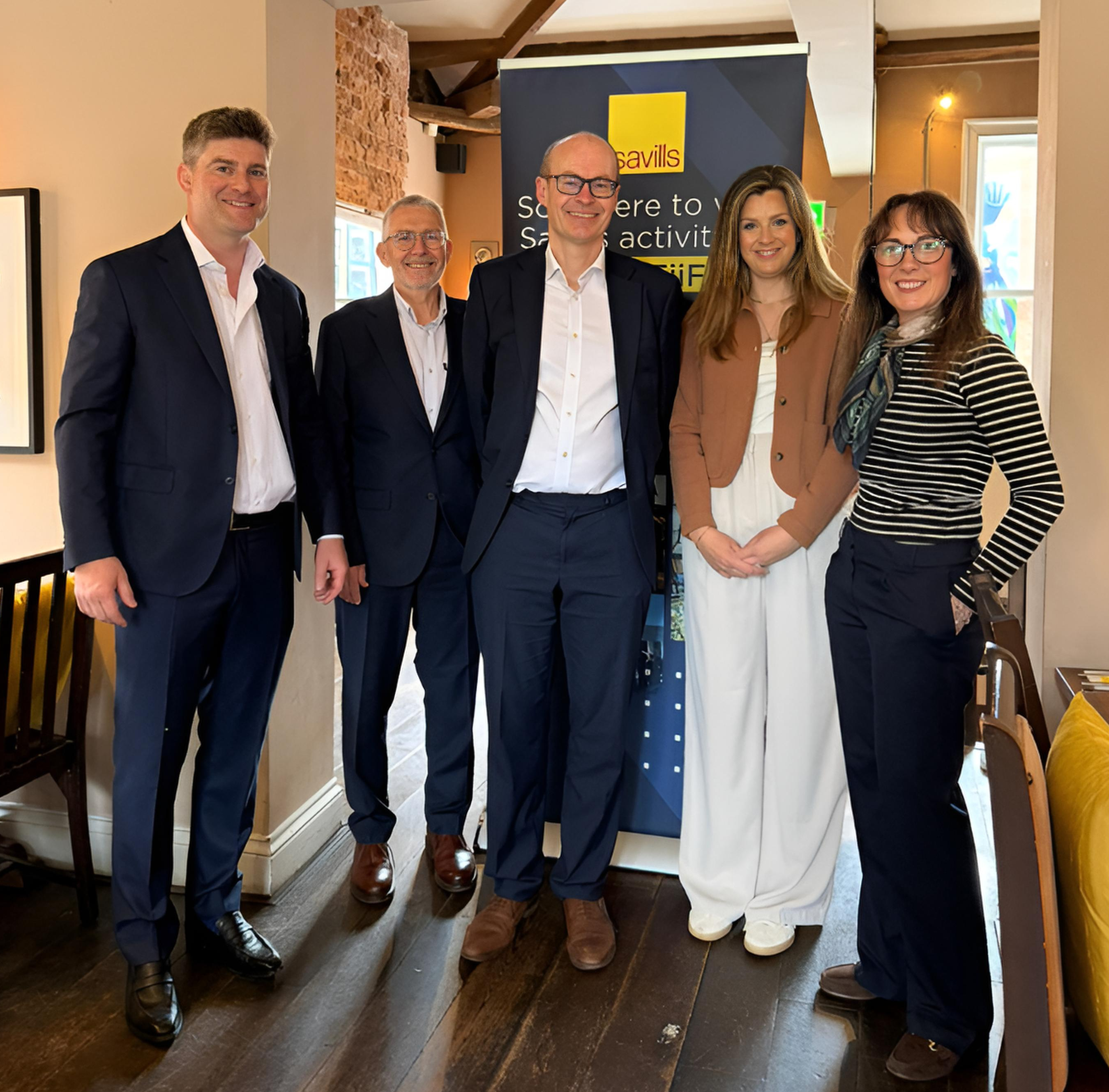
A group of people stood side by side smiling at the camera.

Regeneration specialists appointed

We are delighted to announced we have appointed globally recognised regeneration and property consultancy Savills to help drive forward the transformation of the Riverside Shopping Centre site in Evesham.

Savills will act as our commercial partner. Their role will be to help shape the vision for the redevelopment of the site and attract investment by securing the right partner to deliver the mixed-use scheme.

Read more

Engagement and information survey

Thank you to everyone who attended the public engagement and information event about the project on 16 April 2026 at Evesham Town Hall.

Your feedback will be used to help inform the demolition planning application.

Thank you also to everyone who filled in the survey.

We will share feedback here once we have analysed the results.

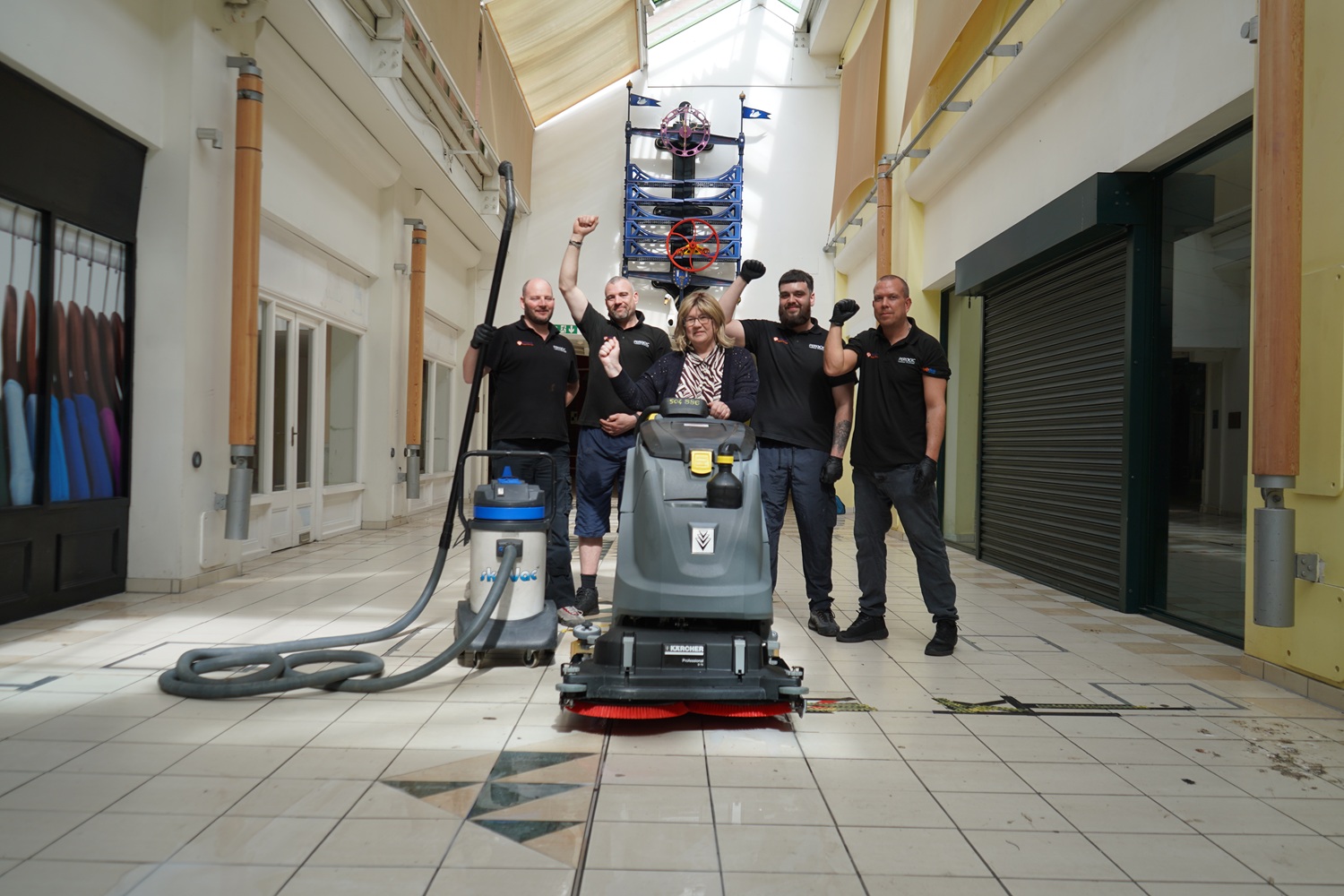
A group of people stood in a shopping centre in front of a pressure washer

Riverside deep clean

One of the promises we made when we took on the centre was to improve its apperance until we can close and demolish the building.

The dedicated staff at Periodic Cleaning Solutions undertook a deep clean of the centre in mid-April. A system is now in place to deal with cleansing issues as they occur.

Vision for the Riverside site

Our aim is to bring forward a mixed-use development that includes new homes, shops and leisure uses.

The scheme will be designed in a way that reconnects the town centre with Evesham's key assets like the River Avon and award-winning Abbey Park.

Improvements will also be made to public spaces in Bridge Street and Market Square to create more opportunities for people to connect and play.

As we are still at the early stage of the redevelopment process, we do not have more detailed information available. We expect to have a worked up scheme available to share with the public in 2027. Please see the timline further down this page for more information.

Redevelopment timeline

Below is the current timeline we are working to based on the information we have available to us now. We will update this timeline as the project progresses.

  • 17 March 2026: Deal done

    Deal is completed for Wychavon to buy the Riverside Shopping Centre, the majority of units in Market Square, Evesham Town Hall and some units in Bridge Street.

  • March 2026: Notice to leave

    At the end of March businesses and organisations still trading within the shopping centre were given formal notice they had six months to leave the centre.

  • 16 April 2026: Engagement event

    Public engagement and information event at Evesham Town Hall. Public invited to find out more about the project, ask questions and offer their initial thoughts and feedback.

  • May 2026 : Demolition application

    The application for permission to demolish the Riverside Shopping Centre will be submitted.

  • Summer to Autumn 2026: Contractors appointed

    The process to appoint a contractor to carry out the demolition and a commercial advisor to secure a development partner to work up the scheme for the site will take place. The demolition contractor will be appointed by October 2026.

  • August 2026: Demolition decision

    Our Planning Committee will consider an application to demolish the centre on 20 August 2026.

  • Spring 2027: Demolition begins

    Work to demolish the centre will likely start in spring 2027. The exact timing depends on the date businesses still trading inside the centre leave.

  • Winter 2027: Plans revealed

    At this point we hope to have a detailed scheme worked up and be able to share this with the public. Further engagement events will be held to gather feedback before a final application for planning permission is submitted.

  • Spring 2028: Application submitted

    The final scheme will be submitted for planning approval during the early part of 2028 with a decision expected by the middle of the year.

  • Autumn/winter 2028: Redevelopment begins

    Work on bringing the approved scheme to life will begin and is expected to take about 12 months to complete.

Frequently Asked Questions (FAQs)

Below are the answers to some of the questions we get asked about the most. 

If you have a question and you can't see it answered here, then please submit it by tapping or clicking the link below and filling in our online form. We'll then add your question and response to the list.

Submit a question on the Riveside Regeneration project,

  • Why can’t you keep the Riverside as a shopping centre?

    The shopping centre has been in decline for several years, stretching back to the aftermath of the financial crash in 2008. Shopping habits have changed with more of us shopping online which has reduced demand from retailers for medium/large retail space in a traditional town centre shopping mall as they downsize or switch to website first ‘click and collect’ business models.

    While it is true there are examples of shopping centres still thriving around the UK, they tend to be large multi-use destinations with a mix of retail, restaurants and leisure attractions or out of town retail parks. They offer more modern, flexible use spaces which is still sought after, particularly by national chain retailers.

    Smaller secondary shopping centres – like the Riverside – have been hit hardest by the change in our shopping habits and lack of demand from businesses. Most of the units are outdated. The centre has been underinvested in for some time, and it would require a significant amount of money to modernise the building for today’s retail market.Previous owners have explored options for the site but have been unable to come up with a viable scheme. If we did this ourselves, there is no guarantee the units would be let, and we will have spent a significant amount of our limited time and money and ultimately still be in the same place.

    Our proposal offers an exciting opportunity to do more than just replace one shopping centre with another. Instead, we have the chance to widen the benefits by transforming the heart of the town centre through reconnecting it with the town’s key assets like Abbey Park and the River Avon and create a mix of uses that will attract new investment and support the long-term future of Evesham Town Centre.

  • Why do you have to put housing on the site? Why can’t there be more shops, restaurants etc?

    Houses are included in the scheme, not because we don’t want or support shops, but because a retail-only scheme is unlikely to attract the level of investment needed to redevelop the site. Adding homes to our proposal economically supports our wider ambition to regenerate the town centre. Housing brings in more people who will use town centre businesses, creates opportunities for new investment and is supported by national and local planning policy. Without the inclusion of housing, it is unlikely that a retail- and leisure-only scheme could be delivered or sustained in the long term.

    It’s important to remember this is a mixed-use proposal. Shops, restaurants and other leisure businesses remain an important part of the future vision for Evesham Town Centre.

  • Why can’t we have something exciting like a modern cinema, bowling alley, ice rink etc?

    We’re not ruling this out, and we understand why people would like to see new leisure attractions such as a cinema, bowling alley or similar uses in the town. These types of businesses are run by private operators. Ultimately, whether particular leisure operators choose to invest is a decision for them, based on market demand.

    Our role is to create the right conditions for investment by bringing the site forward for redevelopment and working with a development partner to deliver a scheme that is attractive to businesses.

    A mixed-use development gives the best chance of attracting these types of businesses to the town centre.

  • Will the multi-storey car park be demolished?

    Yes the car park will be demolished as part of the redevelopment.

  • I am concerned about the loss of parking in Evesham due to the demolition of the multi-storey car park?

    The multi-storey car park is in poor condition and underused. As part of the evidence for the demolition planning application, we have ordered a survey of parking capacity across the town centre.

    Early results indicate that even without the multi-storey car park, there is enough capacity across existing car parks to cope with demand. Ensuring there is adequate parking to support the mixed-used scheme we are proposing will be one of the factors that will need to be fully considered during the formal planning application process.

  • I am a business in Market Square/Bridge Street and I am concerned about the impact of noise, construction deliveries and other traffic on my business.

    We are committed to minimising disruption for nearby businesses and residents wherever possible. As part of the planning process, we will be required to submit a Noise and Air Quality Assessment alongside an agreed Construction Environmental Management Plan (CEMP). The CEMP itself will detail measures including controlled working hours to reduce noise during sensitive periods, and to limit dust and general disturbance.

    Construction deliveries and traffic will be managed through an agreed Traffic Management Plan, including designated routes and timing restrictions to avoid peak periods, while maintaining access for customers, staff, and suppliers. Clear signage will be provided alongside regular communication with businesses throughout the works, including advance notice of key activities and a dedicated contact for any concerns, to help ensure businesses can continue to operate as smoothly as possible.

  • Won’t this just make traffic congestion worse in Evesham?

    Any redevelopment will need to demonstrate Evesham’s road network and parking provision can cope with the expected level of use. This will be carefully considered as part of the planning process. People who live close to shops, services and transport links tend to make fewer journeys by car as their needs can be met within walking or cycling distance.

  • What type of housing will be built and who will live in them?

    Our first aim is to demolish the building. We will also appoint a development partner later this year who will work with us on a detailed planning application which will contain this information. We are also committed to further engagement with residents when we get to that stage of the process.

  • How long will demolition/construction work last?

    We expect the initial demolition phase to last about 18 months to two years. After that it is difficult to say at this stage. However, we will be running the development of the scheme and the planning application process alongside the demolition so as not to cause any unnecessary delay.

  • What will happen to Evesham Public Hall?

    Evesham Public Hall will be protected and maintained during the demolition process. It will be refurbished and brought back into use as part of the wider regeneration project.

  • What will happen to the toilets in Abbey Park when the multi-storey car park is demolished?

    Unfortunately, the toilets in Abbey Park will be demolished as part of the demolition of the Riverside Shopping Centre site. We will provide a high-quality alternative within the park as a temporary measure while we work on a permanent solution. We will ensure the closure is properly advertised when we have a date.

    The toilets in Abbey Park are tired and in need of investment. This is a fantastic opportunity to create something modern, and to the same high standard, as our other award-winning public toilets across the district.

  • How long will the centre stay open for now you own the building?

    Businesses still trading inside the centre have been given notice they need to leave the centre at the earliest possible opportunity. The centre will remain open while this process takes place.

    We are supporting the charitable organisations that occupy units within the centre to relocate and we are confident they will all have somewhere else to base their operations from in the near future.

  • How are we going to ensure the centre and surrounding area is clean and well maintained?

    A deep clean of the centre took place in mid-April. A plan is now in place to ensure cleansing is monitored and issues are responded to appropriately. This includes keeping the outside areas free from litter.

    We will ensure the building remains safe to use until the centre is closed and demolition can begin.

  • Why is the previous owner still involved with the centre ?

    Although the building is now under our control, the centre needs to remain open and continue to be managed day-to-day until all businesses have left.

    As the previous owner already has the staff and systems in place to do this, we have agreed they will run the centre on our behalf until it is empty but with direction from us. This will be less disruptive and ensure we can move more quickly to the demolition phase of the project.

  • What is happening to Evesham Town Hall?

    The freehold to Evesham Town Hall is already owned by Evesham Town Council. We have bought the leasehold to the building as part of the Riverside regeneration deal. 

    We have offered to gift the leasehold to Evesham Town Council and they have accepted. We hope this transfer of ownership can be completed as soon as is practicably possible.

    This will guarantee one of the most important civic and heritage buildings in Evesham will be properly looked after into the future.

  • What will happen to the Millennium /Swan Clock?

    The clock will be removed and stored safely before demolition takes place. We will then look for ways the clock can be used within the new development or elsewhere within the town centre.

  • What will happen to this project when Local Government Reorganisation happens?

    We don't anticipate Local Government Reorganisation impacting the project. By the time Local Government Reorganisation happens on 1 April 2028, the project will be well advanced and at the point where we will be seeking planning permission. Our strong expectation is the new unitary council that replaces Wychavon will simply oversee the final stages of the project.

Read more …Evesham Riverside Regeneration Project

Wychavon Growth Fund Application Guidance

In this section

Introduction

This document is intended to give you some useful information to help you present a strong and convincing case for why you should receive a grant award for your project from Wychavon Growth Fund.

Included in this document are some hints and tips, and details of what will happen next. Under the ‘Completing Your Application’ section, we have addressed each of the questions in the order that you will find them in the application. We recommend that you use this document alongside completing the application. Of course, if you have any questions, you can Contact Us for further information. You can find our details in the Contact Us section.

Please ensure that you complete all sections of the application form accurately and provide us with all required documentation; without these we will not be able to process your application.

Accessing the Application Form

To begin your application, please click the link below to access the online application form. This will take you directly to the form, where you can provide all required details and upload any supporting documents.

Access the Application Form

Tips for a Successful Application

  • Clear Objectives: Clearly outline the objectives and expected outcomes of your project.
  • Detailed Budget: Provide a detailed and realistic budget with quotes to support your cost estimates.
  • Value for Money: Demonstrate how your project offers value for money and benefits your business or organisation.
  • Supporting Documents: Include all necessary supporting documents, such as permissions and quotes; without these we will not be able to assess your application.

Using the Application Software

  • As you progress through the application, you will have the opportunity to save your work and finish it later. You will receive an automated email that will include a link to go back to your saved work.
  • At the top of the application, there is a status bar telling you how much you have completed so far.
  • Fields that are compulsory are identified by a *. If you forget to complete a compulsory field and attempt to move to the next page, there will be a warning message prompting you to complete the missing information.
  • You can navigate forwards and back, if you need to check or change what you have entered.
  • At the end of the form, provided you agree to receiving emails, you will be sent an automated email with a copy of what you have submitted.

Eligibility Requirements

Before you can proceed with completing your application, you must confirm that your business or organisation and proposed project meet all the eligibility criteria. These will be the first questions that you see on the application. They are also listed below:

Eligibility Criteria:

·       You are a business, CIC, social enterprise or not-for-profit organisation that:

o   is based in Wychavon

o   generates commercial income through the sale of goods or services, and

o   meets the programme’s definition of an SME (Small and Medium Sized Enterprise), including any affiliated businesses or organisations

Definition of an SME for this programme

For this programme, SME includes micro, small and medium‑sized enterprises.

o   Micro: 0–9 employees

o   Small: 10–49 employees

o   Medium: 50–249 employees

A business or organisation qualifies as an SME if:

o   It has fewer than 250 employees, and

o   It has either:

o   a turnover of £44 million or less, or

o   a balance sheet total of £38 million or less.

Employee and financial figures must include all affiliated businesses or organisations

Explanation of “affiliated businesses or organisations”

Affiliated entities are those connected through ownership, control, or significant shared interest. This includes (but is not limited to):

o   parent companies

o   subsidiaries,

o   sister companies with common ownership

o   entities with shared governance or financial control

  • The purpose of the grant is to support economic growth, and your project can demonstrate a strong, positive impact on the growth of your business or organisation.
  • Your project will be at least 50% match funded.
  • If your application includes building works, you have Contacted Us before submitting the application to discuss any planning considerations, and you have confirmation that you are able to proceed with your application.
  • If you are a start‑up business or organisation—meaning your business or organisation is operated under a new legal entity (for example, a newly registered sole trader, partnership, or limited company) and has not yet started trading or has been trading for less than one year—you must:

o   have completed approved business start‑up training (e.g., Worcestershire County Council‑affiliated training), or can demonstrate equivalent knowledge through alternative training or qualifying experience. General business experience alone will not meet this requirement unless it relates to ownership or management of a start‑up business within the last 10 years that operated for a minimum of two years; and

o   have a business plan.

For advice or support on preparing a business plan please Contact Us.

Unfortunately, if you are unable to confirm that you meet these eligibility criteria, this means your project does not meet the eligibility requirements for this grant scheme, so you are unable to continue with your application. If you need further advice, please Contact Us.

Ineligible Expenditure

After confirming that your business or organisation and proposed project meet all the eligibility criteria, you will be asked whether your project includes any ineligible expenditure listed below:

Ineligible Items:

  • Solar panels and their associated equipment, including batteries and invertors
  • Electric vehicle (EV) charging points and associated infrastructure
  • Marketing, promotional and branding activities, including website development, unless undertaken by a start‑up, in which case all of these activities are eligible where they support business growth.
  • Vehicles (e.g., cars, vans, delivery vehicles)
  • Statutory or legal obligations/requirements
  • Insurances
  • Staff costs
  • General operating or running costs, including recurring revenue expenses (e.g., utilities, rent, subscriptions, licences)
  • Mandatory skills training
  • Repaying existing loans or debts
  • Reimbursement of goods/services already purchased prior to the date of an offer letter
  • Projects that enhance the productive capacity of farms or primary agricultural producers, including machinery, equipment, or activities that directly increase on-farm agricultural output. Note: This exclusion applies only to projects undertaken by farms or businesses directly engaged in primary agricultural production and does not apply to businesses that supply goods or services to the agricultural sector, provided those businesses are not themselves carrying out agricultural production
  • Creation or purchase of short‑stay tourist accommodation units, including (but not limited to) self‑catering accommodation, glamping units, holiday pods, lodges, cabins, shepherd huts, yurts, safari tents, or any other prefabricated or modular visitor‑accommodation structures
  • Items subject to finance, credit facilities, or hire-purchase agreements 
  • Activities that may bring Wychavon District Council into disrepute.

Unfortunately, if you cannot confirm that your project excludes all ineligible items, you are unable to progress your application. If you need further guidance, please Contact Us.

Completing Your Application

Select Your Funding Option

The various levels of grant funding and the associated eligible businesses or organisations are shown in the table below.

Grant amount Eligible organisations
£500 to £2,000

Start‑up SMEs (businesses, CICs, social enterprises, and not‑for‑profit organisations) that have not yet begun trading or have been trading fewer than 12 months

Existing SMEs trading 12 months or more

£2,001 to £5,000

Existing SMEs, including businesses, CICs, social enterprises and commercially active not‑for‑profits, trading 12 months or more

£5,001 to £15,000

Existing SMEs, including businesses, CICs, social enterprises and commercially active not‑for‑profits, trading 12 months or more

The first question in this section asks you to confirm whether you are a start‑up business or organisation—meaning your business or organisation is operated under a new legal entity and has not yet started trading or has been trading less than one year—or an existing business or organisation, meaning you have been trading for 12 months or more.

If you are a start‑up, only the £500–£2,000 funding band is available, so you will automatically move to the next section. If you are an existing business, you will be asked to choose the funding band you wish to apply for. There are three bands, each representing the maximum grant available. Please select the band for the grant amount you are applying for, not the total project cost.

If you choose either the £2,001–£5,000 or £5,001–£15,000 band, you will also be asked whether your project will take place in one of Wychavon’s three towns (Droitwich, Pershore or Evesham) or in a rural area outside these towns.

Later in the application, you will be asked to confirm the exact grant amount you are requesting. As you must provide at least 50% match funding, your grant request cannot exceed half of your total project costs.

About You

This part of the form allows you to provide basic information that enables us to contact you if we have any questions, or when we are ready to tell you how your application is progressing. If you have used an agent, consultant, or business manager to complete your application, and you want them to act on your behalf, you can provide us with their contact details.

About Your Business or Organisation

  • Business or organisation name and address: Please ensure that you include the full legal name and the address where your business or organisation is registered.
  • Legal status of your business or organisation: Select the legal status that best describes your business or organisation from the list provided. If you select ‘Other’, you will be asked to specify your exact legal status.
  • Links or relationships with an elected member or officer: You must tell us if you have any personal, financial, or organisational links with an elected member or officer of Wychavon District Council. This information does not make you ineligible, it simply enables us to manage any conflicts of interest and ensure a fair, unbiased assessment process.
  • The number of Full-Time Equivalent (FTE) staff: For the purposes of this programme, 1 FTE (Full‑Time Equivalent) is defined as 30 hours or more per week. Please include yourself when calculating FTEs. Part‑time staff should be counted on a pro‑rata basis. For example, if one person works 20 hours per week and another works 25 hours, their combined 45 hours equate to 1.5 FTE.
  • Annual Turnover or Income: Please tell us your total turnover or income for the last full financial year. Start‑up businesses or organisations that have not yet begun trading (or have been trading for less than one year) should enter N/A.
  • The sector you operate in: Select the sector that best reflects your business or organisation. If you select ‘Other’, you will be asked to specify.
  • Primary day-to-day activities: Describe the normal, day‑to‑day activities your business or organisation undertakes. This helps us clearly understand what you do and how your project fits with or develops your existing operations. If your project involves expansion or diversification, you can explain this later in the application.
  • Affiliated businesses or organisations: We need to understand whether your business or organisation has any affiliations that may impact on your eligibility for funding. For this programme, we define an affiliated business or organisation as:

An affiliated business or organisation is any entity that is directly or indirectly related to another through ownership, control, or a significant shared interest. This includes, but is not limited to, parent or holding companies, subsidiaries, sister companies under common ownership, and entities with shared governance or financial control.

If your business or organisation has any affiliations with another business or organisation, you will be asked to provide details of that affiliated business or organisation, including the name, the nature of the affiliation, the total number of FTEs, Turnover (£) and Balance Sheet (£). Contact Us if you have any questions about this definition.

  • Public funding in the last three years: Grant funding limits applicants to a maximum of £315,000 public sector funding in a rolling three-year period (this is the Minimum Financial Assistance limit set by the UK Government). This also includes any de minimis grant support you may have received via the European Union. For this reason, we ask you about any public funding you have received in the last three years. You must tell us about any public sector funding received, its purpose, the amount, and when you received it.
  • Identifiers and reference numbers: You will be asked to provide details of the following identifiers and reference numbers.
  • o   Universal Tax Reference – if you are self employed
  • o   Companies’ House Certificate of Incorporation Reference Number
  • o   Registered Charity Number

If an identifier or reference number does not apply to your business or organisation, enter N/A.

  • VAT status: If your business or organisation is VAT registered, you will be asked to provide your VAT number.
  • Start-up businesses or organisations: If you are a start-up business or organisation, which for the purpose of this programme means your business or organisation is operated under a new legal entity and has not yet started trading or has been trading less than one year, give us details of any approved business start-up training that you have received. This will include Worcestershire County Council affiliated training, such as the Enterprising Worcestershire Start-It Business Masterclass. If you have not undertaken approved training, you can tell us about any relevant or alternative training that you have received which will help to demonstrate your readiness to start and manage your business or organisation.

    You will also be asked to upload a copy of your business plan. If you need any advice or support on preparing a business plan Contact Us. As part of the assessment of your application, we need to evaluate the strength of your business case and your ability to deliver it. This is so we can be satisfied that any grant you receive will lead to sustainable growth.
  • Existing businesses or organisations: You will be asked to upload a copy of a full set of accounts. These should be your statutory audited/unaudited accounts, or if you are a sole trader, a copy of your most recent HMRC self-assessment return. Please ensure that all pages are included. If these are older than 6 months, you will also be asked to provide your most up-to-date Balance Sheet and Profit & Loss information.

If you are an existing business or organisation and do not have a full set of accounts, you will need to provide an explanation.

There will also be an opportunity to tell us about any unusual changes in your turnover or profit margins, large amounts of cash at the bank, or dividends or directors' remuneration averaging over £150,000 per director/shareholder each financial year over the last 3 years.

As part of the assessment of your application, we need to evaluate the financial stability and health of your business or organisation, so that we can be satisfied that any grant funding we provide, will be managed appropriately.

Businesses and organisations that are in financial difficulty, have ceased trading or have closed without being required to do so as part of Government and local restrictions; are dissolved or about to be dissolved; are insolvent or if insolvency action had been instigated against them (including any petition or where a striking off notice has been made); are dormant, i.e. not trading but not insolvent, are not able to apply under this programme.

About Your Project

  • Project name: Your project name should include the name of your business/organisation, and one or two words to explain your project. E.g. XYZ Business – CNC machine.
  • Project start date: Projects must not begin until they have received funding approval. You should allow at least 4 weeks from submitting your application to receiving a decision.
  • Project end date: Projects are normally expected to be completed by 31st January 2027. If your project is likely to continue beyond this date, you should Contact Us in advance to discuss your project idea and proposed timeline before submitting your application.
  • Where the project will take place: The project must be delivered within the district of Wychavon. If your project will take place at an address other than the one you have given us for your business or organisation, we will ask you to let us know where the project will take place, the postcode and relevant Wychavon ward.
  • Rented, leased, or tenanted land or premises: If your project will take place on rented, leased, or tenanted land or premises, you must upload a copy of the lease or tenancy agreement. We need to be satisfied that you have legal permission to use the land or premises for the project, as well as checking to ensure that any risks are appropriately managed. For example, a short lease agreement could put a project at risk of not being delivered or result in the benefits being only short-term.
  • Buildings work and change of use of existing buildings: If your project involves either buildings work or the change of use of existing buildings, you will need to tell us if planning consent is required.

If you are unsure whether your project needs planning permission, you can ask the Local Planning Authority to confirm this by applying for a Certificate of Lawfulness of Proposed Use of Development. Please note that there is a fee for this service, and you should allow at least 8 weeks from the date your application is submitted for a decision.

If you have received any professional planning advice, please provide the name and contact details of the person who has given you the advice.

If your project involves buildings work and/or the change of use of existing buildings, you will be asked to select one of three statements that apply to your proposal:

  • o   It does not amount to development, under section 55 of the Town and Country Planning Act 1990, or the change of use is not a material one (i.e., it is not subject to the requirements of planning control).
  • o   It is permitted by the Town and Country Planning (General Permitted Development) (England) Order 2015 (as amended), or that the material change of use is permitted by the Town and Country Planning (Use Classes) Order 1987 (as amended).
  • o   It will be done or carried out in accordance with a planning permission.

Where relevant, you will be asked to provide reference numbers, decision dates, and upload copies of consents.

We cannot accept proposals that require the grant of planning permission, unless this has been agreed with us before completing your application.

  • Permissions or licences: If your project requires permission, including listed building consent, or licences to be delivered, you will be asked to provide details including the type of permission or licence and the date that this was obtained or is expected. We need to be satisfied that your project is compliant and can be delivered within the timescales you have outlined.
  • We cannot accept proposals that require the grant of listed building consent, unless this has been agreed with us before completing your application.
  • Project costs: You will need to outline for each item or area of work that you propose to have funded, a description, the name of your chosen supplier, and if applicable, the names of suppliers 2 and 3, together with the quoted cost for each net of VAT and including VAT.

You should refer to our recommended procurement process to confirm how many quotes you are expected to obtain. If you have not yet been able to secure the required number of quotes but have at least one, you may still submit your application. However, you must provide the remaining quotes when we request them.

The procurement requirements are:

  • o   Items worth £0 - £5,000 (plus VAT) – minimum 1 quote is needed
  • o   Items worth £5,001 - £50,000 (plus VAT) – minimum 3 quotes are needed
  • o   Items worth £50,001 and above (plus VAT) - tender process

You will need to upload copies of all quotes you have received, making sure that the files you uploaded have a file name that includes the Work/Item number and whether they relate to the chosen supplier, supplier 2, or supplier 3. E.g. Item 1_chosen supplier_[Name].

You must provide at least one quote for each item or work area you are proposing.

  • Procurement process: If the grant amount you are requesting falls within band £5,001–£15,000 you should explain the process you have used to decide upon your chosen supplier. We expect that your procurement process should fall in line with the one we recommend, which is shown above under the paragraph Project costs.

    We expect that you will choose the cheapest supplier, however, your procurement process may consider other factors. If you have not chosen the cheapest supplier, you should explain the basis of your choice. If your application is successful and you have not chosen the cheapest supplier, we may decide to fund your project based on the costs provided in the lowest quote(s). This would not preclude you from using your chosen supplier.
  • Match funding and how you propose to fund project costs: If the grant amount you are requesting falls within band £5,001–£15,000 you will be asked to complete a table showing the source of the funding for your project. You should enter the source of the funding, the amount, and the status of the funding. For example, whether you have applied for the funding, or it is approved. The costs will include the amounts that you are requesting as part of your grant application, as well as any match funding. Please ensure that you list the amount of grant funding you are requesting in this table. For match funding, enter the status column of the table, the source of the funds. E.g. ‘own funds’ or other grant schemes, such as those run by the Lottery.

You can apply for funding for up to 50% of the costs. Costs should be net of VAT unless the VAT is recoverable. You should ensure that this figure matches the combined costs of your chosen suppliers.

If the grant amount you are requesting is within band £500-£2,000 or £2,001-£5,000, we will ask for confirmation of the amount of match funding that you will be contributing to the project and its source, as well as the total amount of grant funding that you are requesting. You can apply for up to 50% of the total project costs.

  • VAT costs: If your business or organisation is VAT registered, we expect that you will have excluded VAT when entering the funding costs for your project. If you have not excluded VAT, you should explain the reason for this.
  • Explaining your project: This is your opportunity to describe:
  • o   What the project involves
  • o   Activities to be delivered
  • o   The purpose and need for the project, including supporting market need (If the grant amount you are requesting falls within band £5,001–£15,000, you will be asked a specific question about market need)
  • o   How the grant will be used
  • o   How the project will address the problems or opportunities identified

Your answer should be specific, clear, and concise.

You are encouraged to upload photographs, diagrams, or site plans showing existing conditions or proposed layouts.

The following questions only apply if the grant amount you are requesting falls within band £5,001–£15,000.

  • The need and alternative solutions: When developing your project, you will have considered the challenges you face, the need for the project, and the alternative options available to you. Please explain what your business need is, what alternative solutions you explored, and why you believe your proposed project represents the most effective option. This information will help us better understand the rationale for your project and the value it will deliv
  • Research or evidence that demonstrate market need: The market in which you operate consists of the community members, customers, businesses, or other stakeholders that you aim to reach. Tell us about their needs and how your project will support these. Have you done any research to understand what their needs are and gained feedback on whether they consider the project will be helpful? This may include conversations or consultation with your community members, customers and stakeholders, or research you have done to see what other businesses or organisations are doing to address the issue your project aims to solve
  • Impact of public funding: This is your opportunity to explain what the impact will be on your project, should you be successful in receiving public funding. We also want to understand what would happen if you were unsuccessful, or the amount you were awarded was less than you requested. Would your project still go ahead? Would you change the project in some way and what would those changes be? How would the impact of your project reduce because of those changes?

Project Delivery

This section only applies if the grant amount you are requesting falls within band £5,001–£15,000.

  • Potential risks: With any project, there are likely to be risks. You have likely already considered those risks and thought of a plan to avoid or minimise them; please use this section to tell us about that process. Some ideas are below:
  • o   Unexpected expenses can arise, leading to the project exceeding its budget.
  • o   There can be delays or interruptions to the delivery of the items you are intending to purchase, which could impact on your project timeline and reduce your income.
  • o   Issues with new suppliers, such as poor quality or failure to meet deadlines, could jeopardise the project.
  • o   New technologies could become outdated quickly, requiring further investment.
  • o   Failure to consider all regulatory or compliance issues could prevent the project from becoming operational.
  • Who will be managing the project delivery: Have you designated a specific individual within your business or organisation to oversee the project's delivery? How will this responsibility fit into their regular duties? Given that project management can be demanding, it's important to assess the support and resources they will need to successfully manage the project and ensure timely and effective completion.

Project Impacts and Business Outcomes

  • Project outputs: Select from the list all the outputs you expect your project to deliver. The options are:
  • o   Job creation – New roles that will be created directly as a result of the project.
  • o   Increase in turnover – Anticipated growth in your organisation’s revenue.
  • o   Increase in visitor numbers – Expected rise in the number of visitors or attendees.
  • After selecting your outputs, you will be asked a few additional questions to help us understand your projected outcomes in more detail:
  • o   Job creation: How many additional fulltime equivalent (FTE) staff do you expect to employ as a direct result of the project?
  • o   Increase in turnover: What is your expected increase in turnover one year after the project is completed? (Turnover refers to the total income your business or organisation receives.)
  • o   Increase in visitor numbers: How many visitors do you currently receive, and how many additional visitors do you expect to receive each year, one year after project completion?

If you anticipate any other outputs beyond the three listed above, you will also have the opportunity to provide details.

  •  Return on investment: To help us understand the financial benefit of your project, you should consider and calculate the return you are expecting on the total investment proposed by your project. Put in simple terms, what is the financial gain that you are expecting and how have you arrived at this figure
  • Impact on other businesses and organisations: With any investment, there can be a ‘ripple’ effect, with other businesses and organisations also benefitting. Tell us what these benefits are for your project. Will other local suppliers or service providers find that their revenue increases? E.g., offering improved visitor accommodation could mean attracting more visitors who in turn, will use local shops, attractions and hostelries. Will the improvement in facilities help improve the quality of life of local residents, and what impact will that improvement have?

Declaration

Please ensure that you read all the statements included and that you are authorised to sign the declaration. If you do not understand any of the statements, please Contact Us.

 Privacy Policy

Please ensure that you read and understand the statements and Contact Us if you are unclear. You can find our details in the Contact Us section. To receive an automated notification confirming receipt of your submission and providing a copy of your answers, you should ensure that you answer ‘Yes’ to receiving emails. If you prefer not to receive this notification, you should answer ‘No’ to receive emails.

Next Steps

How your application will be assessed

Your application will be assessed through a clear, consistent, and impartial process designed to ensure fairness for all applicants. The assessment process includes the following stages:

  • Initial Review

All applications undergo an initial review by the Economic Development team to confirm that the required information and supporting documents have been provided.

  • o   You may be contacted at this stage if clarification or additional information is needed.
  • o   To avoid delays, please ensure your application is complete on submission and respond promptly to any requests for further information.
  • Eligibility and Due‑Diligence Checks

Complete applications proceed to formal eligibility and due‑diligence checks. These checks ensure that:

  • o   your organisation and project meet the programme’s eligibility criteria,
  • o   financial and organisational information is accurate and robust, and
  • o   the proposed project aligns with the aims and requirements of the grant programme.
  • Independent Assessment

Eligible applications are then assessed against a set of clearly defined criteria by experienced officers. For grant requests between £5,001 and £15,000, two independent appraisers will assess the application separately before it is considered by an appraisal panel.

Assessment criteria include (but are not limited to):

  • o   Demonstrated need for the project and evidence of how it will deliver a strong, positive impact on business or organisational growth.
  • o   Value for money, including evidence that competitive quotes have been obtained and that proposed costs are reasonable.
  • o   Need for public funding, including whether the grant requested will deliver a proportionate level of outputs and outcomes, and — for applications between £5,001 and £15,000 — the additional benefits the grant will enable compared to what could be achieved without support.
  • o   Financial viability, considering the stability of the organisation and the affordability of the project.
  • o   Return on investment (ROI) and the scale of economic or organisational benefits compared with the cost of the project.
  • o   Project sustainability and long‑term impact, ensuring the outcomes are meaningful and proportionate to the amount of grant funding requested.
  • o   Deliverability, assessing whether the project can be successfully delivered on time and within budget.
  •  Ensuring Impartiality and Fairness

To ensure a rigorous and unbiased process:

  • o   All assessments follow a standard scoring framework.
  • o   Assessors declare any conflicts of interest; where a conflict exists, a different assessor or panel member is assigned.
  • o   Decisions are recorded, and an audit trail is maintained to ensure transparency and consistency.

The Final Decision

Following the assessment process, a formal recommendation will be made based on the outcome of the eligibility checks, due‑diligence review and appraisal.

  • For grant requests between £500–£2,000 and £2,001–£5,000, recommendations are submitted to the Economic Development Programme Manager or the Head of Economic Development, who will make the final decision on whether a grant offer can be issued.
  • For grant requests between £5,001–£15,000, recommendations are submitted to the Director of Economy and Environment and the Executive Board Member for Economic Growth and Tourism at Wychavon District Council. They will jointly determine whether the application is successful and whether a grant offer can be made.

All decisions are made using the same assessment criteria and within a consistent decision‑making framework to ensure fairness, transparency and impartiality. Applicants will be notified of the outcome once the decision has been finalised.

Unsuccessful applicants will receive a letter explaining the reasons why their application was unsuccessful. Applicants can ask for the decision on their application to be reviewed if they think that:

  • the decision was based on an error of fact;
  • the decision was wrong in law; or
  • a procedural error has been made.

What Happens Next

For successful projects, we will assess whether the award of funding constitutes a subsidy. If necessary, we will request a signed letter confirming that the grant award does not exceed the Minimal Financial Assistance (MFA) threshold. Enterprises can receive up to £315,000 of MFA over three financial years.

We will then verify that we have the most up-to-date information before issuing a Grant Funding Agreement (GFA). The GFA must be signed by both parties and forms a legally binding contract, allowing the successful project to commence. While projects may choose to start before the GFA is signed, this is not recommended. Any work undertaken before the GFA is signed is done at the risk of the business or organisation receiving the funding.

Glossary

Affiliated business or organisation: For the purposes of this programme an affiliated business or organisation is any entity that is directly or indirectly related to another through ownership, control, or a significant shared interest. This includes, but is not limited to, parent or holding companies, subsidiaries, sister companies under common ownership, and entities with shared governance or financial control.

Existing business or organisation: A business or organisation that has been trading for 12 months or more.

Full-Time Equivalent (FTE) staff: For the purposes of this programme, 1 FTE (Full‑Time Equivalent) is defined as 30 hours or more per week. Part‑time staff should be counted on a pro‑rata basis.

Match funding: The money that an applicant must contribute alongside a grant. In other words, the grant pays part of the project costs, and the applicant “matches” it with their own contribution.

Permitted development: The types of building work or changes of use that can be carried out without needing to apply for full planning permission. These rights are granted automatically by national legislation (in England, through the General Permitted Development Order).

Planning consent: The formal approval from the local planning authority that allows you to carry out certain types of building work or change how land or buildings are used.

Procurement: The formal process of buying goods, services, or works from an external supplier. It is how a business or organisation purchases things in a fair, transparent, and cost-effective way.

SME: For this programme, SME includes micro, small and medium‑sized enterprises.

    • A micro‑business has 0–9 employees.
    • A small business has 10–49 employees.
    • A medium business has 50–249 employees.

All SMEs must also have either a turnover equal to or less than £44m or a balance sheet total equal to or less than £38m.

Start-up business or organisation: A start-up business is a business or organisation that:

  • has not yet started trading, or
  • has been trading for less than one year,

and is operated by a new legal entity (for example, a newly registered sole trader, partnership, or limited company).

A business will be treated as an existing business where the application is made by a business that is already trading under the same legal entity, even if the application relates to a new product, service, or change in business activity.

The classification as a start-up is based on the trading history of the applicant business, not on the previous experience of the owner or business partners.

Contact Us

If you need more support you can email our team at This email address is being protected from spambots. You need JavaScript enabled to view it..

If you would like to speak to an individual officer then their contact information is below.

  • Meg Crane

    Economic Development Support Officer

    • Email: This email address is being protected from spambots. You need JavaScript enabled to view it.
    • Phone: 01386 565345

    Read Vic Allison's full profile

  • Adrian Rosten-Smart

    Economic Development Grants Officer

    • Email: This email address is being protected from spambots. You need JavaScript enabled to view it.
    • Phone: 01386 565453

    Read Jayne Pickering's
    full profile

Read more …Wychavon Growth Fund Application Guidance

Wychavon Growth Fund

In this section

Promoting business growth in Wychavon in the manufacturing, rural, tourism and hospitality sectors.

The following film gives more information about the Wychavon Growth Fund and how to apply:

For ideas on how the funding could work for your business watch this short film showcasing previously supported projects:

Read the accessible transcript for Wychavon Growth Fund success stories

Accessible Video Transcript: Wychavon Growth Fund Success Stories

  • Video Title: Wychavon Growth Fund success stories
  • Published By: Wychavon District Council
  • Duration: 3 minutes, 21 seconds

Part 1: Aztec Adventure

[00:05]

[VISUAL: The video opens with a fake image of a website and the text “Wychavon Growth Fund success stories” being typed in.]

[00:05] Mark (Aztec Adventure):

"My name is Mark from Aztec Adventure. We're a multi-award-winning company with three sites in Worcestershire. We're over here at Upton Warren today out on the lake in some sailing boats. We’re an outdoor leisure business. We have two lakes where we offer sailing and paddleboarding, and over in Evesham, I have a crazy golf course and a high ropes course."

[VISUAL: Footage of Mark sailing a small dinghy sailboat talking into the camera, followed by close ups of him pulling ropes, steering sails and helping a woman zip up her life jacket.

[00:23] Mark:

"So this grant, it was a 50/50 grant between Wychavon District Council and us. We bought three sailing boats—there was £28,000 in total, and the council put in £14,000."

[VISUAL: Footage of Mark looking into the camera pulling ropes and steering the sail ship and wide shots of the boat out on the lake.]

[00:37] Mark:

"The boats have been a great asset. We’ve had individual groups learning to sail, we’ve had instructor courses running using them, and we’ve also had the RYA here doing senior sailing instructor courses. So they are great boats for a great variety of people, and they’ve really helped. Receiving the grant is the only way I could afford to buy these boats, so it’s a massive help to the business and everyone that comes down and uses them."

[VISUAL: Mark talking into he camera with the sunlit lake in the background followed by close up shots of him laughing and talking to a woman passenger in the boat.]

[01:01] Mark:

"If you’re thinking about applying for a grant, it’s definitely worth doing. The support is there from the council, it’s easy to do, and it’s definitely worth going for."

[VISUAL: Mark smiles at the camera with the sunlit lake and active sailboats visible behind him.]

Part 2: Watersedge Wellness Venue

[VISUAL: Transition to a tranquil countryside lake setting. The camera pans across a custom-built wooden studio structure with large glass windows overlooking the water. Cut to Sophie standing outside the bright studio space speaking to the camera.]

[01:13] Sophie (Watersedge):

"Hi, I'm Sophie and I'm a co-founder here at Wateredge. We are a holistic wellness venue—we do everything from paddleboarding to bungee fitness, mental health dip sessions, sauna sessions... yeah, quite a wide array of different kind of wellness opportunities here."

[VISUAL: Montages showing participants enjoying wild swimming in the lake, people relaxing near a barrel sauna, and a group enjoying bungee yoga in the studio.]

[01:31] Sophie:

"We actually lost our mom five years ago coming up, and she always wanted to do something with the lake. We had it in the family as a fishery, so she always wanted to do paddleboarding or swimming or something like that. After we lost her, I was due to move back to London, and my sister said, 'Do you want to set this up in honor of our mom?' So I didn't move back to London, and together we've done it as a team."

[VISUAL: Cut to footage of Sophie walking up and into the spacious interior of the wooden wellness studio, followed by more cut away shots of people enjoying the yoga session.]

[01:59] Sophie:

"So the grant from Wychavon was £25,000, and we used it to fund the studio, which cost a total of about £170,000. It's totally changed how we operate everything."

[VISUAL: Footage shows people participating in a yoga class inside the warm studio, while through the window, swimmers can be seen entering the lake outside.]

[02:14] Sophie:

"Before, we were a bit compromised because we had the stretch tent space, but we couldn't ever do anything together at the same time because obviously that's where everyone changes and stuff. So now it's made that an option. We have yoga on at the same time as a swim, and people are able to come and do both all in one, rather than having to make two journeys to come and do the same sessions."

[VISUAL: Close-up of Sophie speaking to the camera, followed by cut away shots of her talking to a woman, chatting to people by the fireside in front of the studio and more overhead shots of the lake and people wild swimming.]

[02:35] Sophie:

"It's meant that we can do loads of sessions that are warm and much safer, so yeah, it's made a hell of a difference. We applied for the grant because it is such a helpful initiative. We probably would have been really stretched to afford it without having the grant there to match what we invest. It's really relieved us financially and meant that we can focus on other things as well."

[VISUAL: Sophie showing two people around a cosy, furnished wooden lodge with glass windows looking over the lake. A final summary slide displays the Wychavon District Council logo and website link for business grant information as the video ends.]


What is the Wychavon Growth Fund?

The Wychavon Growth Fund is fully funded by Wychavon District Council.  It supports a wide range of activities that help businesses grow—whether through investing in new equipment, expanding facilities, creating new jobs, or improving productivity.

The Fund welcomes applications from micro, small and medium sized enterprises, Community Interest Companies, social enterprises, and commercially active not for profit organisations based in Wychavon. This includes all sectors from manufacturing, rural enterprises, hospitality, tourism, and the wider business community. Grants range from £500 to £15,000, depending on your project and business type.

This page explains who can apply, what funding is available, and how the application process works.

If you’d like support at any stage, just contact us we’re here to help.


  • What Funding Is Available?

    You can apply for one of three grant bands. These differentiate between Small and Medium sized Enterprises (SMEs) and whether they are not yet trading or have been trading for less or more than 12 months.

    Grant Bands

    Grant Amount

    Eligible Organisations

    £500 – £2,000

    • Start‑up SMEs (businesses, CICs, social enterprises and not‑for‑profits) not yet trading or trading fewer than 12 months
    • Existing SMEs trading 12 months or more

    £2,001 – £5,000

    Existing SMEs (businesses, CICs, social enterprises and commercially active not‑for‑profits) trading 12 months or more

    £5,001 – £15,000

    Existing SMEs (businesses, CICs, social enterprises and commercially active not‑for‑profits) trading 12 months or more

    All grants require at least 50% match funding, meaning your grant request cannot exceed half of your total project cost.

  • What Projects Can the Fund Support?

    The Growth Fund can support projects that strengthen your business and create local economic benefit. Examples include:

    • The purchase of a piece of kit, for example a CNC machine that will allow the business to expand into a new market, thus creating new jobs.
    • The purchase of a machine, for example to enable onsite packaging that will improve the efficiency of the business thus increasing productivity and in turn turnover.
    • The creation or expansion of a workspace to accommodate new activity/employees.  Note that any building work projects must be discussed with the team before an application is submitted.
    • Purchase of equipment; for example, freezers to support a dairy farm diversifying into ice cream production, resulting in increased turnover and job creation. Please note that projects aimed at increasing agricultural output (e.g., boosting raw milk production) are not eligible.
    • The creation of facilities to enable a fishing lake to become a swimming lake. Note that any building work projects must be discussed with the team before an application is submitted.
    • Projects which develop the local experiential tourism/immersive travel offer (focused on showcasing local history, people, culture, food and environment), for example the purchase of new machinery and/or equipment necessary to delivering the experience.
    • Accessibility enhancements to tourist attractions, for example the installation of a Changing Places facility.
    • Adding something new to the tourism business and/or area, for example an outdoor shelter to develop/improve the out of season offer.
    • Enhancement of hospitality businesses, such as restaurants, pubs, cafés and hotels, including investment in specialist equipment or improved facilities that support business expansion, increased capacity, improved customer experience, or the introduction of new food and drink services.

    If you're unsure whether your project meets the criteria, feel free to contact us.

  • Who Can Apply? – Eligibility Criteria

    To apply, your business must:

    • Be an SME based in Wychavon. This includes micro, small and medium sized enterprises which have fewer than 250 employees and either a turnover of £44 million or less, or a balance sheet total of £38 million or less.
    • Show that your project supports business growth.
    • Provide 50% or more match funding.
    • Contact us before applying if your project involves building works or planning considerations.

    When assessing whether your business or organisation is an SME, you should consider any affiliated businesses or organisations. These are entities connected through ownership, control, or significant shared interest.

    Start‑ups (operating under a new legal entity and not yet trading or trading less than 12 months) must also:

    • Have completed recognised business start‑up training, or demonstrate equivalent experience
    • Provide a business plan

    If you cannot confirm all eligibility criteria, unfortunately you will not be able to apply.

  • What Cannot Be Funded (Ineligible Costs)

    The Growth Fund cannot support:

    • Solar panels or related equipment
    • Marketing, promotional and branding activities, including website development, unless undertaken by a start‑up, in which case all of these activities are eligible where they support business growth
    • Vehicles
    • Legal/statutory obligations
    • Insurance
    • Staffing costs
    • Running costs (rent, utilities, subscriptions etc.)
    • Mandatory skills training
    • Debt repayment
    • Items purchased before the grant offer letter
    • Tourist accommodation units (pods, lodges, glamping units)
    • Purchases made using finance or hire purchase
    • Projects that enhance the productive capacity of farms or primary agricultural producers, including machinery, equipment, or activities that directly increase on-farm agricultural output. Note: This exclusion applies only to projects undertaken by farms or businesses directly engaged in primary agricultural production and does not apply to businesses that supply goods or services to the agricultural sector, provided those businesses are not themselves carrying out agricultural production
    • Activities that may bring the Council into disrepute

    A list of other ineligible costs is included in the application form and guidance.


How to Apply

Applications are now open and submitted through our simple, step‑by‑step digital form:

Submit an application

We strongly recommend reading the Wychavon Growth Fund Application Guidance first—it explains the criteria, process, and what information you need to provide.

Application Guidance


  • Overview of the Application Process

    • Applications are completed online.
    • You’ll confirm eligibility, then provide details about your business, finances, project and match funding.
    • You will need 1–3 quotes depending on the value of each costed item.
    • Existing businesses upload accounts; start‑ups upload a business plan.

    Projects must not begin until funding has been approved.

  • Documents You Will Need to Provide

    When completing your application, you will need to upload several supporting documents. These will vary depending on your business status and the amount of funding you are requesting. The list below gives an indication of what may be required, but please refer to the application guidance for full details.

    • Full set of accounts or a business plan
    • Lease or tenancy agreement (if applicable)
    • Planning permission or other required consents (if applicable)
    • Quotations for all costed items
    • Photographs, diagrams or site plans (optional but encouraged)
  • How Your Application Will Be Assessed

    Your application will undergo a three stage assessment process.

    • Stage 1: Initial review to check all required information and documents are provided. Applicants may be contacted for more details.
    • Stage 2: Eligibility and due‑diligence checks covering financial health, compliance, and alignment with programme aims.
    • Stage 3: Independent scoring by experienced officers against key criteria, including:
      • Need for the project
      • Value for money and procurement
      • Market need
      • Financial viability
      • Return on investment
      • Project deliverability and sustainability
    • For grants £5,001–£15,000: Two independent appraisers and a senior‑level appraisal panel review the application.
    • Conflicts of interest are declared, and an audit trail ensures fairness and transparency.

    Unsuccessful applicants will receive feedback and can request a review in specific circumstances.

  • The Final Decision

    • Decisions for grants up to £5,000 are made by the Economic Development Programme Manager or Head of Economic Development.
    • Larger grants (£5,001–£15,000) are decided by the Director of Economy & Environment and the Executive Board Member for Economic Growth and Tourism.
    • All applicants are notified of the outcome.
    • Unsuccessful applicants can request a review under specific circumstances:
      • the decision was based on an error of fact;
      • the decision was wrong in law; or
      • a procedural error has been made.
  • If Your Application Is Successful

    If approved:

    • We will confirm whether the award counts as a subsidy under MFA rules
    • You may need to sign an MFA declaration
    • A Grant Funding Agreement (GFA) will be issued
    • You must not start the project until the GFA is signed
    • Claims are paid in arrears once invoices and proof of payment are submitted

    Please note: Work completed before the GFA is signed may not be eligible for funding.


Contact Us

If you’d like to discuss your project email: This email address is being protected from spambots. You need JavaScript enabled to view it.

Meg Crane

Economic Development Support Officer

This email address is being protected from spambots. You need JavaScript enabled to view it. 

01386 565345

Adrian Rosten‑Smart

Economic Development Grants Officer

This email address is being protected from spambots. You need JavaScript enabled to view it.

01386 565453


Case Studies

Here is a selection of stories showing how previous funding has helped local businesses and organisations grow. These stories include those from the former Wychavon Rural Fund and demonstrate the real impact that partnership working and targeted investment can have—from supporting expansion to unlocking new opportunities and strengthening the local economy.

Although the Growth Fund is new, these case studies highlight the kinds of positive outcomes we aim to continue delivering across Wychavon.

  • Two people standing at a park

    New path forward to All Things Wild

    When it comes to developing appealing visitor attractions there’s nothing more important than being able to get around and providing for all your customers’ needs. 

    All Things Wild at Honeybourne, Evesham is an immersive wildlife and adventure destination.

    Read more

  • A group of people stood between two vans

    Morris Commercial

    An £11,000 grant helped update the company's prototype manufacturing workshops at Hinton-on-the-Green.

    Read more

  • Three people stood in front of a window

    Wedding Barn

    A £25,000 grant is helping turn a barn in Wick into a dream wedding and conference venue, to help grow the rural economy.

    Read more

  • A man and a woman with a tray of bread

    Eat Your Crusts Ltd

    Naunton Beauchamp baker received £3,692 to buy new equipment to improve the efficiency and production of her business.

    Read more

  • Two owners outside of the Sergeants Mess Community Hub

    The Sergeants Mess Community Hub

    The Sergeants Mess Community Hub in Norton, is a catering and a Community Coffee Shop that was renovated to the tune of £1.6m. 

    Read more

Read more …Wychavon Growth Fund